What if I told you that most of the vegetables you buy in the store contain… almost nothing?
Chemically fertilised, dead soil gives very little nutrition. The vegetables still look good. That's the system we live in today.
But there is an easier, more efficient and more environmentally friendly way to grow food. So why don't we do it at a larger scale?
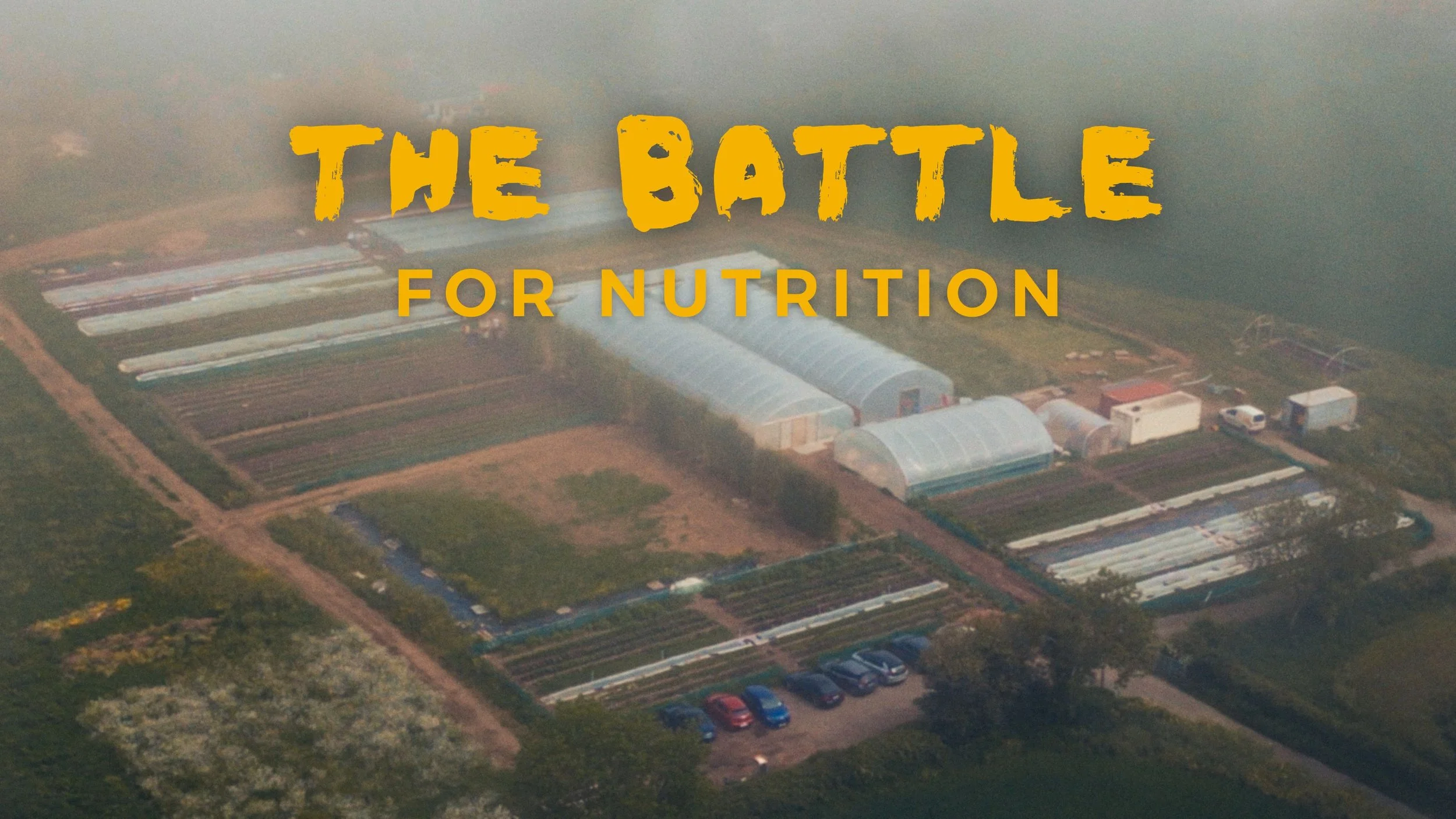
This is the Happy Pear Farm in Greystones, Ireland. Isak and I visited when we were making the film about Harold and his broccoli sprouts, and I found the topic so interesting that it deserved its own film.
The problem with today's food system is that it's about money. Extract as much as possible from the earth for as little as possible. And when that stops working, add more fertiliser, which is like beating a dead horse to get it up a hill.
But it isn't only about money. It's also deeply rooted in how we have done things since farming was industrialised.
A farm built on regenerative methods
There is much more to regenerative farming than what we saw, and we only made one short visit. But I'm convinced this is the way forward: growing food locally that is nutritious and tastes good, and that helps keep biodiversity intact. Less work, more yield.
That should be reason enough to change the big systems that control most of our food production. I want to make a full documentary about it.
Do you know who I should talk to? A local hero somewhere on this planet who does this, or fights for it? Or are you a filmmaker who wants to work on a project like this? Get in touch.