If nothing changes, millennials and Gen Z could be the last generations to drink coffee the way we do today: easy to find, at a decent price.
That sounds strange when Brazilian coffee production keeps growing. This film is about why both things can be true.
The farmer
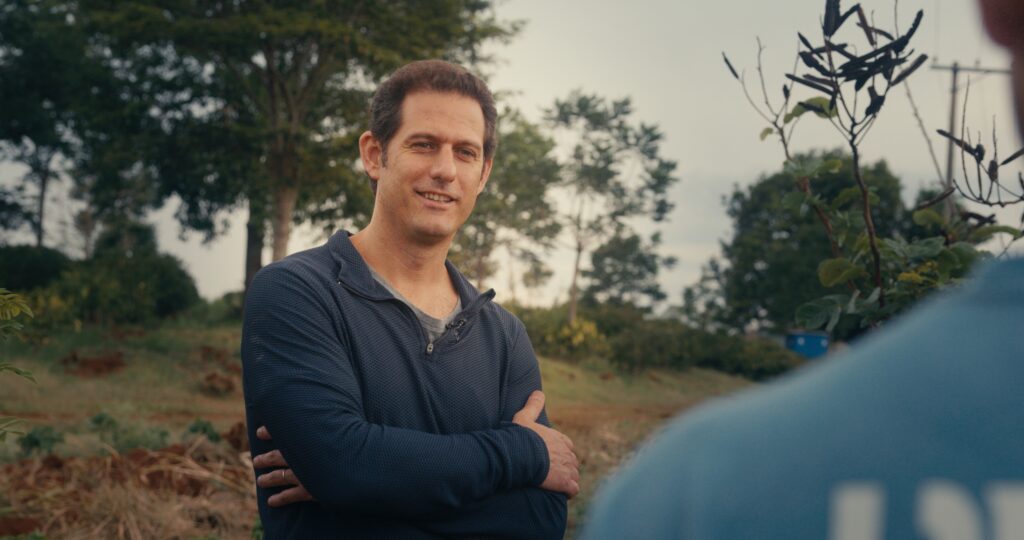
Felipe Croce was born in Brazil and grew up in the United States from the age of three to 21. As a kid visiting the family farm, he didn't even like coffee. It was dark, bitter and something adults drank while talking politics.
At university he took a class called So You Want to Be an Entrepreneur? The professor ran a coffee roastery and gave him a job. Felipe discovered that coffee could taste of blueberries, guava, chocolate and strawberry. When he graduated in 2009, the family farm was struggling. He moved there straight from university and became a farmer.
The farm is Fazenda Ambiental Fortaleza, FAF, in Mococa in the state of São Paulo. His mother started its organic transition in the 1980s.
What is happening to coffee
Most coffee we drink is Arabica, and Brazil grows almost half of the world's supply. Arabica is sensitive to heat. FAF has tracked climate scientists' predictions since 2000. According to Felipe, the farm is already where the forecasts put it in 2040, about 2.8 degrees warmer. By 2050, around half of today's Arabica land may no longer suit the way coffee is grown now: monoculture in full sun.
In a recent year, drought cut Brazil's crop by 23 percent. That is about 13 million bags, roughly everything Colombia produces in a year, and prices rose 90 percent. The industry's answer has been irrigation, pumping more water out of the ground. It keeps the harvest up, and in Felipe's view buys ten or twenty years at most.
The industry taught farmers that fertility comes from the store: fertilisers, herbicides and pesticides shipped in from the other side of the world. Felipe compares it to feeding a person steroids and fast food. They grow, they peak and then they crash.
Another way
At FAF, the farm is also a lab. Felipe grows coffee organically in an agroforestry system, with three rows of coffee and one row of trees. The number of trees per hectare has gone from around 100 to 1,500, many of them raised in the farm's own nursery. Guinea grass is cut and left as mulch to build soil and hold water.
He sees it as a reawakening of indigenous ways of farming, combined with modern efficiency. Cooler soil, more biodiversity, more carbon in the ground. And, he says, healthier plants make better-tasting coffee.
The film also visits Vanessa Moreno, who left her career as a lawyer in São Paulo to grow coffee differently on her family's farm, together with her mother.
These things are like heart attacks. They don't kill you, but they say: do you want to get your act together?
Why I made this film
Before my film in Uganda, I never questioned where my coffee came from. In Brazil, I realised this was about something bigger: what we choose to value, and how hard it is for people to change even when the consequences are in front of us.
What scares me is not that we don't know what to do. It's that we do. Large systems look for temporary fixes to keep the old ways going. But everything I have filmed in this project points the same way: change starts with people, even when it looks impossible.
Coffee still costs about the same today, dollar for dollar, as it did in 1977. Paying farmers properly for regeneratively grown coffee is part of the answer.
Read the original article about the trip.
The question this film answers: what happens if you don't follow the expected path?