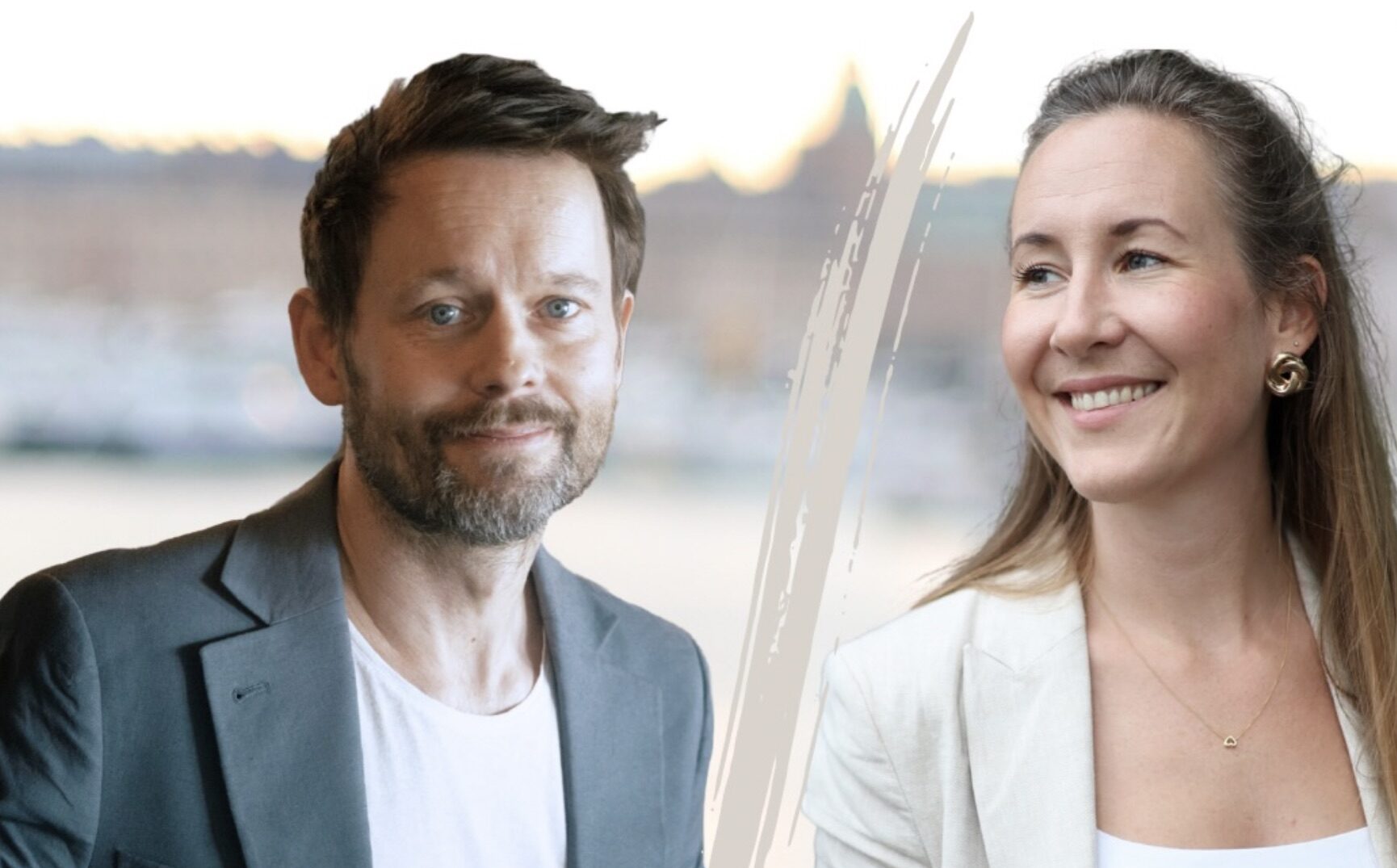
The day after the premiere of THAW, I sat down with Mikaela Seger Nälgård (@mikaela_thelifegrand) on her podcast What It Took. It became the most personal conversation I've had in public. Not about how to make films, but about what it took to start making these ones.
Here are some of the things we talked about.
Two sides of me
For most of my life there have been two sides of me. One that tried to fit in, and did a pretty good job of it. Married early, kids, the apartment, a job in IT straight after school. And one that always felt something wasn't quite right.
When everything happens at once
My little brother died in an accident when I was 24. He was 20. Three years later, within two months, my dad died, my first daughter was born and I started my new career in TV.
Nobody taught me how to grieve, and there was no time or space for it. So I did what a lot of us do. I blocked it out and buried myself in work.
Years later, the CEO we had brought into my production company told me: "Robin, I've never seen you laugh a big, heartfelt laugh. And I've never seen you sad." That's when I realised I had been emotionally switched off for a very long time. If happiness peaks at plus 100 and the deepest valley is minus 100, I was living between minus three and plus three.
That state is actually great for running a business. Setbacks don't hit you, and wins don't distract you. But I'd rather be alive. I'm still finding my way back.
Putting myself in front of the camera
In my first films for 100 Documentaries, I stayed behind the camera, like I had for 15 years. Then I understood that on YouTube, people need a relationship with the person telling the story. That terrified me.
What helped was a simple exercise: film yourself talking nonstop for five minutes. Don't publish it. Watch it the next day, take notes, and do it again.
The harder part came after. When you put yourself in the film, you have to know what you actually feel about things, and stand for it. That has been the best therapy I've ever had.
Seek discomfort
There's always a voice saying: what will people think? I've learned that doing what's uncomfortable is how I grow. I borrow the mantra from Yes Theory: seek discomfort.
Suffering you choose yourself is meaningful, whether it's the gym, a mountain or a hard conversation. And you can't make a splash without upsetting someone. THAW talks about climate change, and that makes some people angry in the comments. Fine. Then it touched something.
Why I make these films
I want to put a spotlight on people, preferably underdogs doing weird and nerdy things, who change the world in their own way. If it inspires someone to ask "what can I do?", the ripples can spread. If you're a hairdresser, maybe you give a free haircut to someone who can't afford one. Doing something for others without wanting anything back makes us happier than any new car.
Since I started, my revenue has dropped by about 70 percent. My client work, now Impact Docs, pays for the project. It's a constant puzzle. But I'm building a platform for impact, not just selling hours.
I call what I make reality documentaries: a blend of the first-person vlog and the classic documentary with a real narrative. Film festival people don't always get it. I think it's what the internet needs.
Three guiding words
When I was trying to free myself from everything that didn't fit, I did an exercise that ended in three words: health, freedom and adventure. Whenever I'm in doubt, I ask myself if a choice moves me towards any of them. If I did the exercise today, I think I'd add a fourth: human connection.
What I'd tell my younger self
Don't rush into things just because they're expected of you. Take the time to find out what you actually want, and don't be afraid if it upsets someone. You can't please everyone.
And to the little boy who learned to be good and not cause trouble: just be you. People will love you for who you are. The ones who don't, you can let go.
Mikaela's last question was what it took to get here. My answer: a lot of figuring out life, and a lot of hard times, to understand that my curiosity is the biggest gift I've ever been given. Now I just want to let it run free.