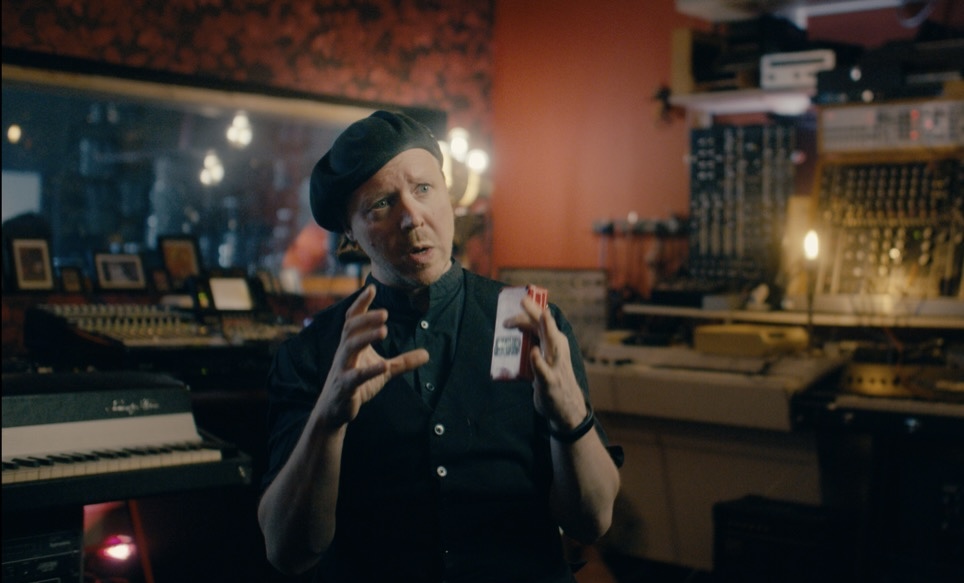
In the big studios of the nineties there was a rule. You turn the knob up to six. Never seven.
Mattias Olsson kept asking why. When he finally got his own small recorder, the first thing he did was turn everything up to seven. Once, he even went to eight.
A life in sound
Mattias was born in Hong Kong in 1975 to Swedish parents and moved to Sweden in 1981. His first memory of sound is an old man selling ice cream from a bicycle, playing a small glockenspiel. Glockenspiel, ice cream, good. That was when he understood that sound and emotion are connected.
He started playing drums at eight and recorded his first album at seventeen. With Pine Forest Crunch he had a hit in 1996. Over the years the studio grew from an apartment, where the bathroom was the echo chamber, into Roth Händle in Stockholm, now in its fifth version.
Collecting stories
The studio holds more than a thousand instruments, and every one has a story. A church in a Stockholm suburb called late one night and gave him its pipe organ. He expected around 70 pipes. There were 280, and a crane had to lift it over the roof. A mellotron from South Africa still holds BBC sound effects on tape: lion roars, splashes and a car crash.
For this film, Mattias built a rhythm from random sources. The bass drum is a practice record of air traffic control, played slowly on a record player made for blind listeners. The snare is white noise from a modular synth.
The goal first, then let go
Mattias doesn't start a recording until he knows one thing: what the listener should feel when the last note ends. Without that, there are too many options.
Once the goal is clear, he lets go. Old gear is unreliable. It sounds different every day. That is the point. The limits force you to think differently, and the accidents are often more interesting than the plan.
He is not against digital tools. He thinks the best music today is probably made on a cheap computer. The analog gear is simply the set of colours he likes to paint with.
Behind every horrible, bad idea, there's usually a pretty good one.
Why I made this film
I met Mattias by chance, while filming his rare plate reverb for a client. We started talking and didn't stop for two hours.
What I take from him is a way of working. Treat every part of a production as a conversation partner. Have a clear goal, then let go of control. That is how I want to make films.
This film was made with support from Soundtoys, who make audio plugins built on the study of analog gear.
Read the original article about Mattias.
The question this film answers: how do you design work intentionally?